What Actually Matters in AI for 2026: A Reality Check for Businesses
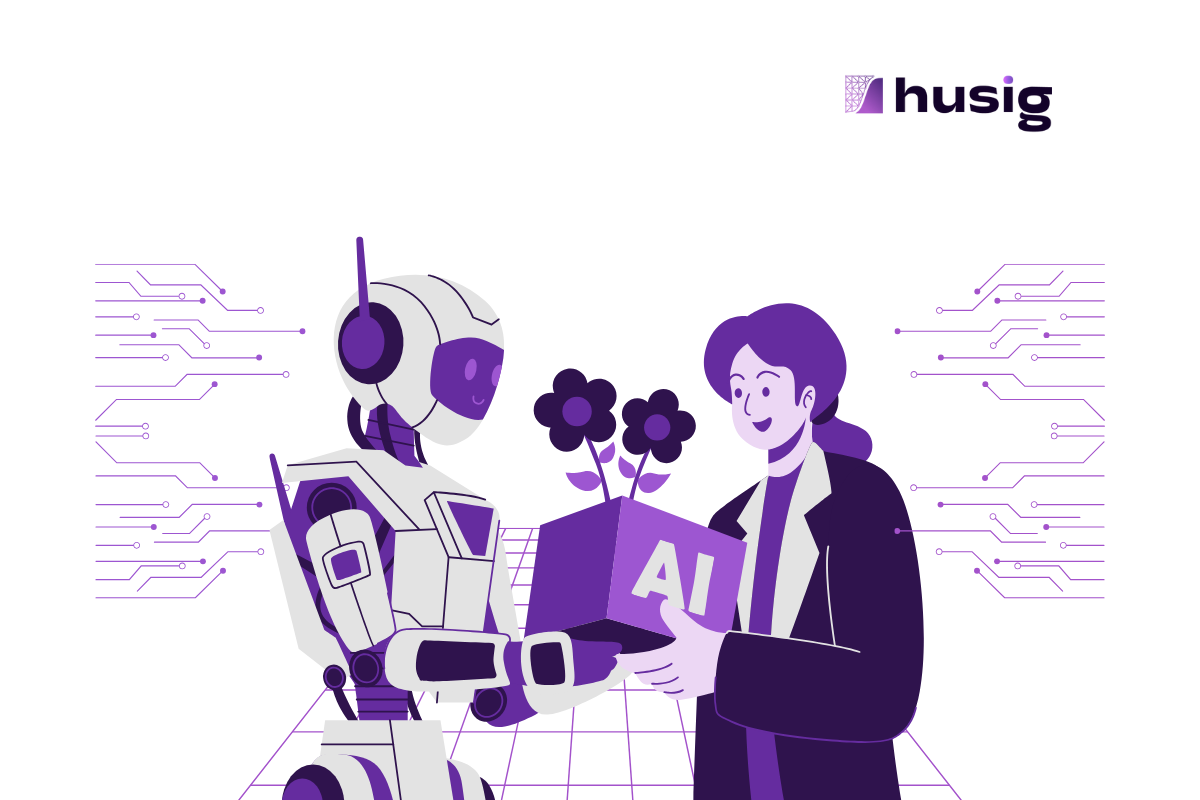
At Husig.ai, we spend our days in the trenches of digital transformation—navigating messy spreadsheets, legacy databases, and the manual processes that keep businesses running. We’re often asked if we’re building the next “world-changing” super-intelligence.
Our answer? No. We’re building tools that help you finish your work by 5 PM.
However, to build for today, we have to keep an eye on where the giants are heading. We recently analyzed the 2026 outlooks from Microsoft and Google Cloud. While they use big words like “Agentic Workflows” and “Repository Intelligence,” the underlying message is clear: 2026 is the year AI stops being a “cool tool” and starts being a “coworker.”
Here are the three trends from their reports that actually matter for your business, and our take on how to handle them.
1. From “Chatbot” to “Teammate” (The Agentic Shift)
Microsoft describes 2026 as a new era where AI evolves from an instrument to a partner. Similarly, Google highlights the rise of Agentic Workflows—where multiple AI agents collaborate to run entire “digital assembly lines” without constant human prompting.
- The Trend: Imagine a world where your AI doesn’t just answer a question about a shipment; it notices the delay, emails the vendor, updates your CRM, and flags the budget impact for your review.
- The Husig Standpoint: We love this, but with a reality check. Google mentions a 95% reduction in query time for employees using natural language to talk to SQL databases. This is exactly what we advocate for: democratizing data. You shouldn’t need a PhD to ask your database a question.
2. Security is the New “Onboarding”
As AI agents join the workforce, Microsoft makes a fascinating prediction: Every agent will need its own identity and security clearance. You wouldn’t give a temp worker the keys to the company vault on day one; why would you give an AI unchecked access to your entire server?
- The Trend: In 2026, organizations will focus on “Ambient Security.” Agents will have clear roles, limited access, and “corporate IDs” just like humans.
- The Husig Standpoint: This is the most underrated trend. At Husig, we believe the biggest barrier to AI adoption isn’t capability—it’s trust. We build with a “Security-First, AI-Second” mindset. If you can’t audit what your AI did and why it did it, it shouldn’t be in your workflow.
3. Efficiency Over “Bigger is Better”
For years, the race was about who had the largest model. Microsoft’s report suggests a shift toward infrastructure efficiency, while Google echoes this by focusing on “speed-to-value” rather than sheer model size.
- The Trend: The “Quality of Intelligence” is becoming more important than the “Size of the Model.” We’re moving toward smaller, specialized models (SLMs) that run faster and cost less.
- The Husig Standpoint: Most businesses don’t need a model that can write poetry; they need a model that can reconcile an invoice. We’re seeing a strategic shift toward Applied Specific Intelligence. For our clients, this means AI that fits the budget and understands your industry’s unique jargon.
Where We’re Placing Our Bets
Reading these reports, three things stand out as genuinely transformative—not in five years, but right now:
- Specialized, Integrated Intelligence: The era of one-size-fits-all AI is ending. Specialized models are proving more valuable because they understand your specific business context.
- Invisible AI: The best AI won’t announce itself. It will be the intelligence layer that makes your existing tools smarter—not another platform cluttering your tech stack.
- Strategic Implementation: The conversation is maturing. It’s no longer “What can AI do?” but “What should AI do?”
Our Take: The Human in the Loop
Both reports agree on one final thing: the “Human-Ready Workforce.” Google notes that the biggest challenge for 2026 isn’t the technology—it’s the people.
At Husig.ai, we don’t view AI as a replacement for your team. We view it as an amplifier. As Microsoft’s leadership puts it, “The future isn’t about replacing humans; it’s about amplifying them.”
The winners of 2026 won’t be the companies with the most expensive AI; they’ll be the ones who strategically integrated focused, secure intelligence into their core business challenges.
Ready to move beyond the hype? Let’s talk about how to get your data ready for the “coworkers” of 2026.
References: