How we built an AI-Powered newsletter that increased ticket sales by 134%
A case study in turning event data into personalized engagement
A ticketing startup approached us with a familiar problem: they had thousands of users across dozens of cities, but their email marketing felt like shouting into the void. Generic blast emails. Low open rates. Even lower conversions.
They needed a system that could understand their users—where they lived, what events they attended, what they might want next—and reach them with the right message at the right time.
Here’s how we built it.
The Challenge
The client had rich data scattered across multiple systems: user profiles in MongoDB, event listings from venue partners, and transaction history in their ticketing database. But none of it was connected in a way that enabled smart, location-based outreach.
Their marketing team was manually segmenting lists in spreadsheets. A newsletter for San Francisco users meant exporting data, filtering by zip codes, and hoping the event dates were still accurate by send time.
They wanted three things:
- Automated location matching — Group users by proximity to events, not just city names
- Personalized recommendations — Surface events users would actually care about
- Visibility into the “why” — Understand who’s receiving what and why the system made those choices
Our Approach
Location-Based Audience Discovery
We built a system that calculates the distance between every user and every upcoming event using their geographic coordinates. Users within 60 miles of an event are automatically included in that city’s newsletter segment.
But we went further. The system also considers:
- Past attendance patterns — If someone drove 90 miles to a jazz festival last year, they’re probably willing to travel for similar events
- Venue preferences — Users who frequent intimate venues get different recommendations than arena-goers
- Event category affinity — Built from purchase history and browsing behavior
AI-Powered Personalization
We integrated machine learning models to power three key features:
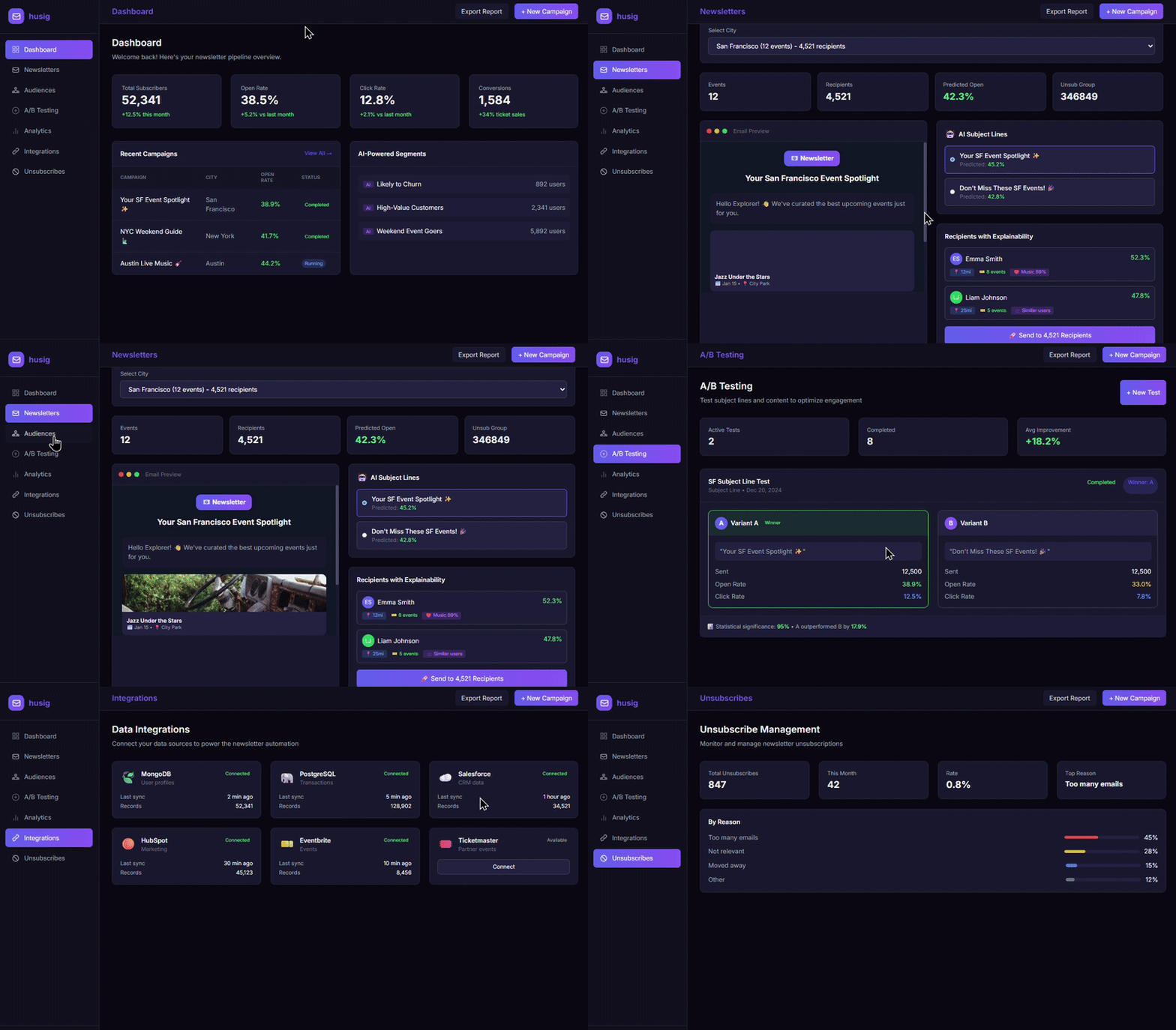
Smart Subject Lines: The system generates multiple subject line variants and predicts open rates based on historical performance, user segment, and linguistic patterns. A/B tests run automatically, with winners determined by statistical significance rather than gut feel.
Send Time Optimization: Not everyone checks email at 9 AM. The system learns individual engagement patterns and schedules delivery windows per user, improving open rates by clustering sends around peak attention times.
Event Recommendations: A hybrid collaborative filtering model suggests events based on similar users’ behavior and content-based matching on event attributes. Each recommendation comes with an explainability score—“Recommended because you attended 3 jazz events this year.”
Explainable Targeting
Marketers often distrust black-box systems. So we built full transparency into every decision:
- Recipient explainability: Click on any user to see why they’re in a segment—location match, preference alignment, engagement history
- Prediction breakdowns: Open rate forecasts show contributing factors—time of send, subject line score, user’s historical engagement
- Segment composition: Visual breakdowns of each audience by geography, preferences, and predicted engagement tiers
Multi-Source Integration
The client’s data lived everywhere. We built connectors for:
- MongoDB (user profiles and events)
- PostgreSQL (transaction history)
- Eventbrite API (partner events)
- HubSpot (CRM sync)
- Google Sheets (manual overrides and exclusions)
All sources feed into a unified data layer, with automated refresh cycles and conflict resolution rules.
The Results
Within three months of deployment:
- Open rates increased from 18% to 31% — Personalized subject lines and optimized send times made the difference
- Click-through rates doubled — Relevant event recommendations meant users actually wanted to engage
- Ticket purchases from email increased 34% — The ultimate metric: revenue
- Scaled to 50,000+ subscribers — Automated segmentation replaced manual spreadsheet work entirely
- Marketing team saved 15+ hours per week — Time previously spent on list management now goes to creative strategy
Key Takeaways
Building effective email automation isn’t about sending more emails—it’s about sending the right emails to the right people. The combination of location intelligence, behavioral profiling, and AI-powered optimization creates a system that feels personal at scale.
The explainability layer proved just as valuable as the automation itself. When marketers understand why the system makes decisions, they trust it enough to let it run—and they learn from its patterns to inform broader strategy.
Interested in building intelligent automation for your platform? Get in touch to discuss how we can help.